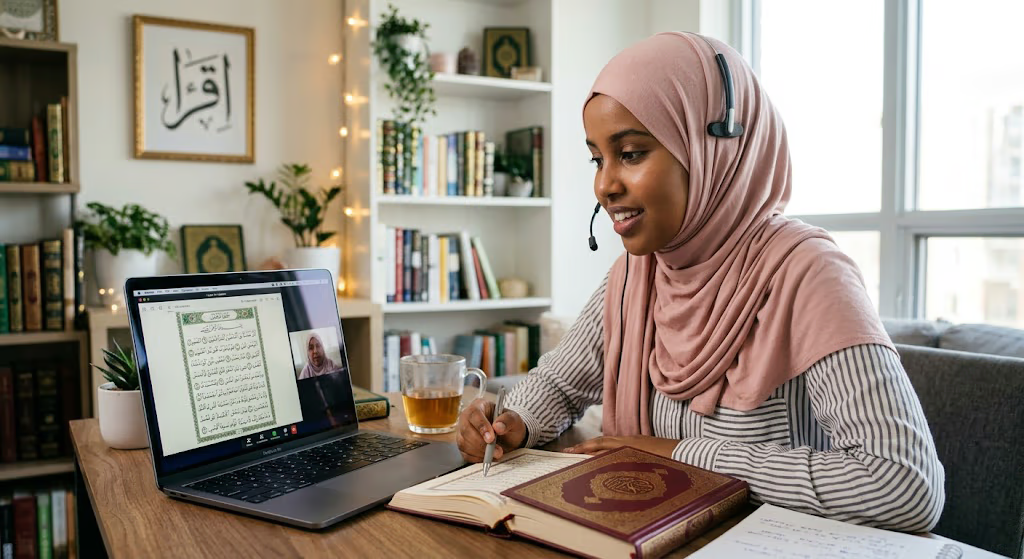
Believe it or not, even the best online Quran platform comes with a few challenges especially when it comes to children. At Hassaan Online Academy, we provide high-quality Online Quran Classes, but we also believe in transparency.
For parents across the UK from London and Birmingham to Manchester, Bradford, Leeds, Glasgow, and Luton understanding both the pros and cons of online Quran learning is essential before enrolling your child.
In this guide, we’ll explore the real downsides of Online Quran classes for kids and how you can overcome them.
Lack of Physical Presence Can Reduce Learning Efficiency
One of the biggest challenges in online Quran teaching is the absence of physical interaction.
In traditional madrassas, teachers can:
- Instantly correct pronunciation
- Observe body language and focus levels
- Build stronger discipline through presence
However, in Online Quran classes for children, especially younger kids:
- They may get distracted easily at home
- Lack of supervision can reduce seriousness
- Engagement levels may drop without proper structure
At Hassaan Online Academy, we tackle this by:
- Using interactive teaching methods
- Keeping sessions engaging and child-friendly
- Offering free trial classes so parents can assess teaching quality
Limited Class Duration (Time Constraints)
Most online Quran institute sessions typically last around 30 minutes.
While this is convenient for busy UK families, it can be a downside because:
- Children may need more repetition time
- Tajweed and recitation skills take longer to develop
- Short sessions may slow down progress
In comparison:
- Traditional madrassas in cities like Leicester or Sheffield often run for 1–2 hours
However, longer sessions don’t always mean better results:
- Group classes may lack individual attention
- Some children may fall behind unnoticed
👉 The key is balance. That’s why our Online Quran Classes for kids focus on:
- One-to-one sessions
- Flexible scheduling for UK time zones
- Option to increase class duration if needed
Lack of Structured Learning Environment
Environment plays a huge role in a child’s learning mindset.
In physical madrassas:
- Kids mentally prepare to learn
- The environment promotes discipline
- Daily routine builds consistency
Apply Now
But with online Quran learning at home:
- Kids may associate home with relaxation
- Distractions (TV, toys, mobile devices) are common
- Lack of routine can affect progress
This is especially noticeable in busy households across cities like East London and Birmingham where space and routine can vary.
At Hassaan Online Academy, we recommend:
- Setting a fixed study corner at home
- Maintaining a consistent timetable
- Parental involvement during early stages
Technical Issues & Internet Dependency
Another practical downside of any online Quran platform is reliance on technology.
Common issues include:
- Internet disruptions
- Audio/video lag affecting pronunciation clarity
- Device-related distractions
For families across the UK, especially in suburban areas, this can occasionally impact the learning flow.
To minimize this:
- Use a stable internet connection
- Prefer laptops/tablets over mobile phones
- Test setup during free trial classes
Requires More Parental Involvement
Unlike madrassas, where teachers manage everything, Online Quran classes for children often require:
- Parents to monitor attendance
- Ensuring homework is completed
- Keeping children disciplined during lessons
For working parents in cities like Manchester or London, this can be challenging.
However, this can also be a benefit:
- Parents stay involved in their child’s Islamic education
- Progress is more transparent
Final Thoughts: Is Online Quran Learning Right for Your Child?
Both traditional madrassas and online Quran teaching have their place in modern Islamic education.
At Hassaan Online Academy, we believe:
- Online Quran Classes are ideal for flexibility and one-to-one attention
- Madrassas are beneficial for discipline and environment
For UK-based families, especially in cities like Bradford and Leeds, the best choice depends on your child’s:
- Learning style
- Schedule
- Level of parental involvement
👉 If you’re unsure, start with our free trial classes and experience the difference yourself.