

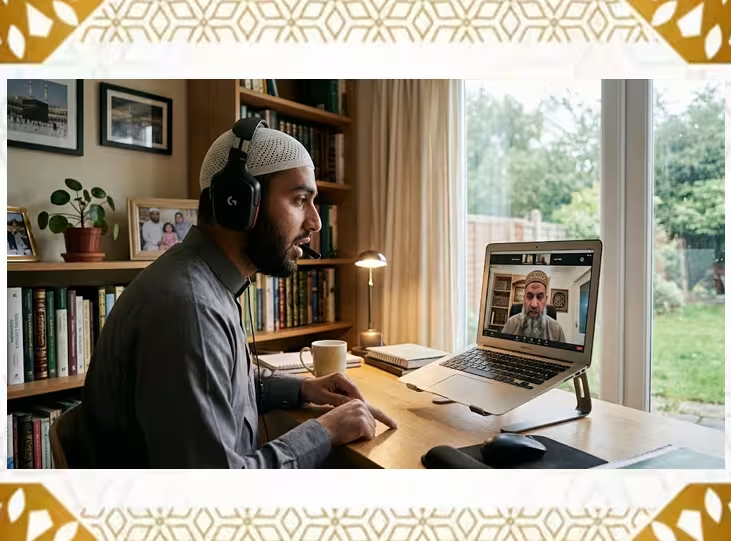
It is never too late to learn the Quran. Every year, many people in their fifties, sixties, seventies and beyond decide that now is the time to learn to read, to fix their recitation or to memorise a few more Surahs. Online Quran classes for adults make this far easier than travelling to evening classes: lessons happen at home, at a calm pace, with a patient teacher. This guide is written for older learners and for the sons and daughters helping them get started, covering what makes lessons work later in life, how to set up the technology simply, and how to stay motivated.
Never Too Late: Why Older Learners Do Well
Older learners often worry that their memory is not what it was, or that they will be slow. In practice, they bring real advantages: patience, a clear reason for learning and more time to practise. Many grandparents tell us they want to read to their grandchildren, recite correctly in prayer or finally finish something they started as children.
The effort itself is valued. The Prophet Muhammad ﷺ said that the one who recites the Quran with difficulty, stumbling over it, receives a double reward (Sahih al-Bukhari and Sahih Muslim). Every slow, careful line counts.
What Makes Online Quran Classes for Adults Work Later in Life
| Need | What helps |
|---|---|
| Eyesight | A tablet or laptop with the page zoomed in, or a large-print Mushaf; good lighting |
| Hearing | Comfortable over-ear headphones; the teacher speaking clearly and a little slower |
| Energy | 30-minute lessons at the learner's best time of day, often mid-morning |
| Memory | Frequent short revision, small daily goals, repeating the last lesson first |
| Confidence | One-to-one lessons in private, with a teacher who never rushes or embarrasses |
Technology Made Simple
Technology worries put many older learners off, but the set-up only needs doing once:
- Choose one device. A tablet on a stand is often easiest; a laptop works well too.
- Install the video app the academy uses and save the lesson link where it is easy to find.
- Test sound and camera together with a family member before the first lesson.
- Write simple steps on a card: "Open the app, press the lesson link, put on headphones."
- Keep the device charged and in the same place, ready for each lesson.
After a week or two, most older learners join lessons without help. If the connection drops, the teacher simply waits and carries on.

Where to Start: Three Common Situations
- Never learned to read Arabic: start with the letters and sounds using Noorani Qaida. Adults often move through it faster than children.
- Learned as a child but forgot: a short refresher of the Qaida, then back to the Mushaf. Much comes back faster than expected.
- Read fluently but unsure of the rules: focus on correct letter sounds and the main Tajweed rules in a Tajweed course.
If you are starting from the very beginning, our guide to learning Quran as an adult from zero explains what the first months look like.
Memorising Later in Life
Memorising is absolutely possible at any age, but the method matters more:
- Memorise a little each day, perhaps one or two verses, and recite them often.
- Listen to the Surah repeatedly from one reciter, at home or on walks.
- Use newly memorised verses in your prayers; it is the most natural revision.
- Start with short Surahs from Juz Amma before longer ones.
A good teacher will set a pace that feels comfortable and keep revising earlier Surahs so nothing is lost.
Comfort During Lessons
Small comforts make a big difference to concentration. Sit in a supportive chair at a table rather than on a sofa, keep a glass of water nearby, and place the screen at eye level so the neck is not strained. If reciting for long tires the voice, tell the teacher; they can mix reading with listening and explanation. Anyone with a health condition that affects energy or breathing can simply ask for a slower pace or a short pause mid-lesson. A good teacher will always adapt.
For Sons and Daughters: How to Help
- Help with the first set-up and the first lesson, then step back.
- Ask about lessons with genuine interest; ask them to recite what they learned.
- Do not correct them in front of others; leave correction to the teacher.
- Consider learning alongside them; many families enjoy reciting together.
Choosing the Right Teacher
For older learners, the teacher's manner matters as much as their knowledge. Look for someone patient, respectful and clear, who explains rather than simply correcting. Many older women prefer a female Quran teacher, which online lessons make easy to arrange. Ask for a trial lesson and notice whether the learner feels relaxed by the end. Adults who want lessons at quiet times of day can also read our guide to Quran classes for working adults, which covers scheduling ideas that suit any routine.
A Gentle Weekly Routine
- Three lessons a week, at the same time, often mid-morning.
- Five to ten minutes on other days: reading the last lesson's page or listening to a Surah.
- One rest day with no pressure at all.
Consistency matters far more than speed. Over a few months, steady short sessions add up to real progress.
Frequently Asked Questions
Is it too late to learn the Quran at 60 or 70?
No. Many people start or return to the Quran later in life. Short, regular lessons with a patient teacher make steady progress possible at any age.
Are there online Quran lessons for adults in the UK?
Yes. One-to-one online lessons let adults of all ages learn at home, on UK time, with a qualified teacher.
What device is best for older learners?
A tablet on a stand or a laptop, with the page zoomed in and comfortable headphones. Set it up once with a family member.
Can older adults still memorise the Quran?
Yes. Memorising a verse or two a day, listening often and reciting in prayer works well at any age.
Can an older woman have a female teacher?
Yes. Female Quran teachers are available, and many older women prefer them.
How long should lessons be for older learners?
Around 30 minutes, three times a week, suits most older learners, with a few minutes of practice on other days.
 Adults
 Adults
 Adults