

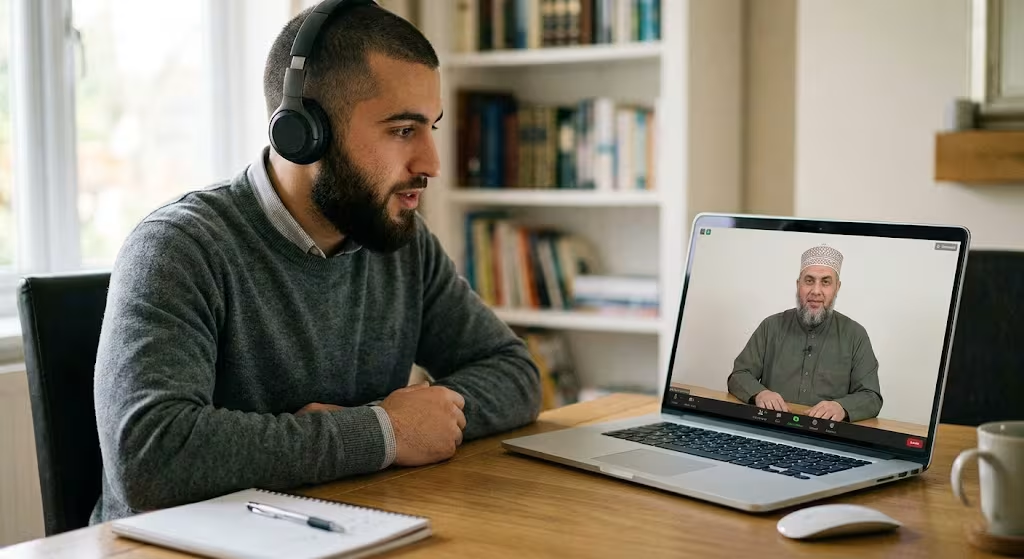
Becoming Muslim is the beginning of a beautiful journey, not a test that requires you to know Arabic or recite the Quran perfectly from day one. If you are searching for Quran Classes for Reverts, you may feel excited to learn while also wondering where to start. The right teacher and a simple learning plan can make those first steps comfortable, practical, and encouraging.
Hassaan Online Academy provides online Quran learning support for new Muslims, reverts, adults, sisters, and families across the USA and UK, including learners in areas such as New York, New Jersey, Texas, California, Illinois, Michigan, London, Birmingham, Manchester, Leicester, Bradford, Glasgow, and surrounding communities.
This guide explains how Online Quran Classes for Reverts can begin, what a beginner should learn first, how to choose a suitable teacher, whether 30 or 60-minute lessons are better, and what realistic progress can look like during your first 30 days.
New Muslims often receive too much information at once. Arabic reading, Tajweed, memorisation, prayer, translation, Islamic studies, and Quran understanding can all seem equally urgent. While each area has value, trying to master everything together can make learning unnecessarily difficult.
A better approach is to divide your Quran journey into three connected areas:
Read a trustworthy translation in the language you understand. You do not need to wait until you can read Arabic before learning about the meanings and messages of the Quran.
Work gradually on the passages you need for your worship, particularly Al-Fatihah, with a qualified teacher who can listen and correct pronunciation patiently.
Learn Arabic letters, vowel signs, joining patterns, and basic reading skills step by step. The long-term goal is to become increasingly comfortable reading directly from the Mushaf rather than depending permanently on transliteration.
These goals do not need to progress at exactly the same speed. A learner in the USA may spend one week improving a difficult Arabic sound while reading an English translation at home. A new Muslim in the UK may already know Al-Fatihah by listening but need help recognising Arabic letters. Both are perfectly reasonable starting points.
Being a new Muslim does not automatically tell a teacher your Quran reading level. Some reverts may have studied Arabic previously, while others may never have seen the Arabic alphabet. Some may know several surahs through listening, while others are learning their first Quranic words.
That is why a useful trial lesson should begin with an assessment. A beginner-friendly assessment can explore:
The purpose is not to judge you. It is to help the teacher create a learning path that matches your actual needs.
At Hassaan Online Academy, the first lesson can be used to understand your level and establish a practical starting point rather than assuming every revert needs the same curriculum.
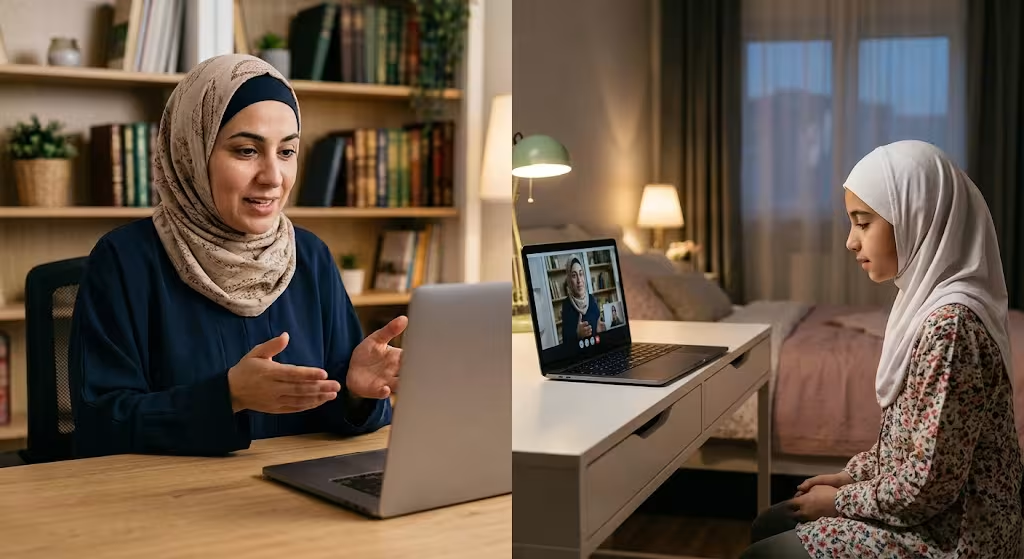
Your first month does not need to be about completing a large number of pages or memorising many surahs. A stronger objective is to develop a repeatable learning routine and see measurable improvement.
| Week | Live Lesson Focus | Practice Between Lessons | Progress to Look For |
|---|---|---|---|
| Week 1: Assessment & Confidence |
Identify your reading level, pronunciation needs, and immediate Quran goal. | Listen and repeat a short teacher-selected passage for 5–10 minutes. | You understand your starting level and know what to practise. |
| Week 2: Arabic Foundations |
Work on selected letters, sounds, vowels, and pronunciation patterns. | Practise a small number of sounds rather than trying to learn everything together. | You begin distinguishing sounds that previously seemed similar. |
| Week 3: Reading & Recitation |
Connect letters and sounds into simple words or short Quranic passages. | Repeat the same material consistently and record questions for your teacher. | You need fewer prompts and can apply corrections more independently. |
| Week 4: Review & Next Goal |
Revisit early material and compare your current performance with your starting point. | Review corrected passages and prepare for your next learning target. | You can identify your progress and understand what comes next. |
The most important part of this roadmap is consistency. A short practice session several times a week can be easier to maintain than attempting a long session once every few days.
Technology makes it easy to find Quran recitations, videos, apps, and online resources. These can be useful for listening and revision, but a beginner may still struggle to understand exactly why their pronunciation is incorrect.
A live teacher can listen to you, identify the problem, demonstrate the correct sound, and ask you to repeat it.
A productive one-to-one lesson can follow this simple structure:
This approach is particularly useful for adults who may feel nervous about making mistakes. A supportive teacher should make mistakes feel like part of learning rather than something embarrassing.
Finding an online Quran academy is easy. Finding a teacher who understands the needs of a new Muslim requires more thought. Whether you live in New York, Chicago, Houston, Dearborn, Los Angeles, New Jersey, London, Birmingham, Manchester, Leeds, Glasgow, or another nearby area, look for an academy that can accommodate your learning level, time zone, and personal preferences.
Ask about the teacher's Quran, Tajweed, Arabic, and teaching background. If you are progressing toward advanced recitation, you may also want to ask about formal Quranic qualifications or Ijazah.
A knowledgeable teacher should also know how to explain difficult concepts simply. New Muslims should never feel embarrassed because they cannot pronounce a particular Arabic letter.
Many sisters prefer learning with a female instructor because they feel more comfortable asking questions and practising recitation in that environment. If this is your preference, look for Online Quran Classes for female learners with suitable female teachers. Hassaan Online Academy can support learners looking for male or female teaching options according to availability and personal preference.
A learner in California has a very different schedule from someone in London. Flexible scheduling is particularly important for adults, students, parents, and professionals.
Be cautious of anyone promising perfect Quran reading within an exact number of days. Your progress depends on your starting point, practice habits, lesson frequency, language background, and learning goals. The goal should be steady improvement rather than a race.
Both lesson lengths can work. The better choice depends on your concentration, schedule, experience, and learning objectives.
If you are unsure, starting with a shorter lesson can be sensible. After several weeks, you and your teacher can decide whether additional time would improve your learning.
Online learning can remove several barriers that traditional classes may create for adults and families.
A new Muslim living in London, Birmingham, Manchester, Leicester, Bradford, or Glasgow can study from home without travelling to a local centre. Similarly, learners in New York, New Jersey, Texas, California, Michigan, Illinois, Florida, and other US states can schedule lessons around work, university, family responsibilities, and daily commitments.
The flexibility of an Online Quran Academy can be especially useful for reverts who may not have a local Muslim community nearby or may feel uncomfortable attending their first classes in a group environment.
One-to-one online learning can provide a private space where you can ask questions, repeat difficult sounds, and progress at your own pace.
You do not need to know Arabic before joining Quran Classes for Reverts. Beginner lessons exist precisely to help you establish your starting point.
Transliteration can help during the early stages, but English or Roman letters cannot represent every Arabic sound accurately. Gradually learning Arabic letters is a better long-term direction.
Repeating an incorrect sound hundreds of times may make correction harder later. Ask your teacher when something does not feel or sound right.
Jumping between multiple apps, teachers, books, and videos can create confusion. Follow one structured learning path during your first month.
Progress is also visible when you pronounce sounds more clearly, recognise letters faster, read with fewer prompts, and understand your own mistakes.
Everyone begins from a different background. Compare your current ability with where you were four weeks ago.
Good Quran education is about sustainable learning. Choose an academy that assesses your needs and explains your next steps honestly.
You do not need perfect preparation for your first lesson. Have a reliable internet connection, a phone, tablet, or computer, headphones if preferred, and a quiet place where you can concentrate. If you already know Al-Fatihah or another short surah, be prepared to recite it.
Do not worry if the answer to most of these questions is simply, “I am not sure.” Your assessment should help you decide.
The right Quran Classes for Reverts should never make a new Muslim feel behind. Whether you live in the USA, UK, or a nearby community, your Quran journey can begin exactly where you are today.
You may know no Arabic. You may already memorise Al-Fatihah but struggle with pronunciation. You may understand some Arabic but need structured Tajweed. Whatever your starting point, a patient teacher can help you identify the next useful step.
Hassaan Online Academy supports online Quran learning for reverts, adults, sisters, and families through structured, flexible lessons designed around individual needs.
Do not wait for perfect Arabic. Do not compare your first month with someone else's tenth year. Begin with an honest assessment, practise a small amount consistently, and review your progress after 30 days.