

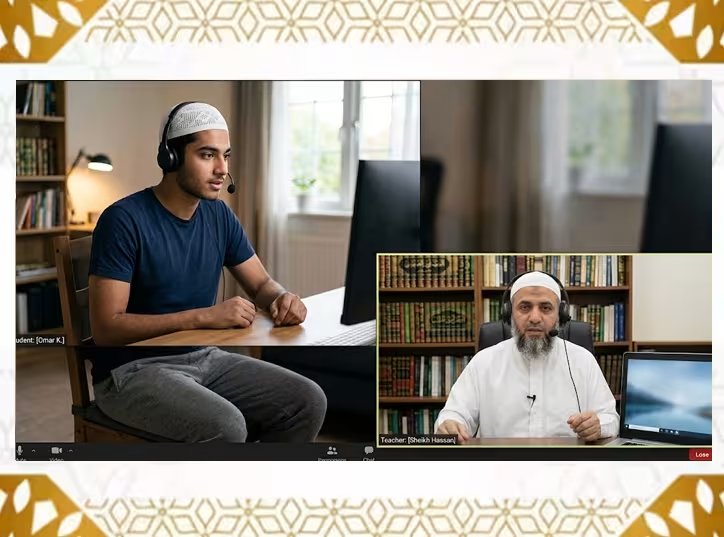
Learning the Quran should never be out of reach because of money, and many families search for free online Quran classes in the UK for good reason. There are genuinely free options, and some are excellent. But "free" can mean very different things: a single trial lesson, a volunteer-run group class with a waiting list, or an app with no teacher at all. This guide explains honestly what free options exist, what each one is good for, what to check before you rely on them, and how to keep the cost of one-to-one lessons low if you decide you need them.
Can You Learn the Quran Online for Free?
Yes, you can make a real start for free, especially with listening and short Surahs. Where free options usually fall short is consistent, individual correction. Reading the Quran correctly depends on a teacher hearing each letter you say and fixing mistakes before they become habits. That takes a teacher's time, which is why ongoing one-to-one lessons are rarely free for long.
The Main Free Options Compared
| Option | Good for | Limits to know |
|---|---|---|
| Free trial class | Meeting a teacher, finding your level, comparing academies | Usually one lesson or a short trial period |
| Mosque or community class | Community, routine, Islamic studies | Group sizes, fixed times, travel; individual reading time can be short |
| Volunteer-run online classes | Learners on very tight budgets | Waiting lists, changing teachers, limited time slots |
| Free apps, audio and videos | Listening, copying a reciter, revising Surahs | No one hears your mistakes |
| Family members | Daily practice and encouragement | Only as accurate as the person teaching |
Making the Most of Free Trial Classes
A frequent question is whether you can try an online Quran class before paying. Most reputable academies, including ours, offer a free trial class. Use it well:
- Tell the teacher your goal: learning to read, improving Tajweed, memorising, or helping a child.
- Let the teacher hear you or your child read, so they can find the right level.
- Ask what the first month would cover and how progress is reported.
- Notice whether you were corrected clearly and kindly.
- If you can, compare trials with two academies before choosing.

Free Resources That Genuinely Help
- Recitation audio: listening daily to one clear reciter is one of the best free ways to improve pronunciation and memorise Surahs.
- Word-by-word Quran websites and apps: useful for understanding meaning alongside your reading.
- Printed Mushaf: many UK mosques and Islamic centres can help families get a copy of the Quran, and some charities distribute them free.
- Short guides on Tajweed rules: helpful for revision, such as our free guides to noon sakinah and tanween rules and Madd rules.
Use these to support learning, not replace a teacher. Our article on learning Tajweed without a teacher explains why self-study has blind spots.
What to Check Before Relying on a Free Class
- Who is teaching? Ask about the teacher's training and recitation.
- How many learners per class? In a large group, each child may read for only a few minutes.
- Is it regular? Free classes sometimes stop when volunteers are unavailable.
- Is it safe for children? Parents should be able to sit in or see who their child is learning with; see our safety checklist.
- Is there a plan? Even a free class should be able to say where a learner starts and what comes next.
A Free Starting Plan for the First Month
If you want to begin without paying anything, this simple plan uses only free options:
- Week 1: book one or two free trial classes to find your level, or your child's, and get a starting point.
- Week 2: listen daily to Al-Fatihah and the short Surah you are learning, following the words in a Mushaf.
- Week 3: join a local mosque or community class if one fits your timetable, and keep listening at home.
- Week 4: record yourself reading and compare it with the reciter. Note which letters or rules you are unsure about.
At the end of the month you will know whether free options are enough for your goal, or whether a few one-to-one lessons a week would make a real difference.
When a Paid One-to-One Lesson Is Worth It
Paid one-to-one lessons are usually worth it when:
- A child is starting Noorani Qaida, where every letter sound needs checking.
- You want to fix Tajweed mistakes you have carried for years.
- You are memorising and need someone to hear your revision.
- Group times do not fit around school, work or shifts.
We explain why academies charge for lessons, and whether that is acceptable in Islam, in our article on why online Quran classes are paid.
How to Keep the Cost Low
Parents often ask how much online Quran classes cost in the UK and where to find affordable monthly packages. A few ways to keep costs down without losing quality:
- Start with three lessons a week. It is enough for steady progress for most children and adults.
- Compare the price per 30-minute one-to-one lesson, not just the monthly headline.
- Use free audio for practice between lessons, so paid time is spent on correction.
- Combine a free community class for group learning with short paid lessons for reading accuracy.
Our plans start at £20 a month for one 30-minute one-to-one lesson a week (4 lessons a month), which works out at about £5 per lesson, and the cost per lesson falls on plans with more days a week. You can compare all plans on our online Quran classes UK fees page, and our guide on how many Quran lessons a week helps you pick the right one.
Frequently Asked Questions
Are there free online Quran classes in the UK?
Yes. Options include free trial classes, mosque and community classes, volunteer-run online classes and free apps and audio for practice.
Can I learn the Quran online for free?
You can make a good start for free, especially with listening and short Surahs. Accurate reading usually needs regular one-to-one correction from a teacher.
Can I try an online Quran class before paying?
Most reputable academies, including ours, offer a free trial class so you can meet the teacher first.
How much do online Quran classes cost in the UK?
Prices vary. Our one-to-one plans start at £20 a month for one 30-minute lesson a week.
Where can I get a Quran for free in the UK?
Local mosques and Islamic centres can often help, and some charities distribute free copies of the Quran.
Are free group classes good for children?
They can be great for community and routine. In large groups, though, each child may read for only a few minutes, so some families add short one-to-one lessons.
 Kids
 Fees
 Fees