

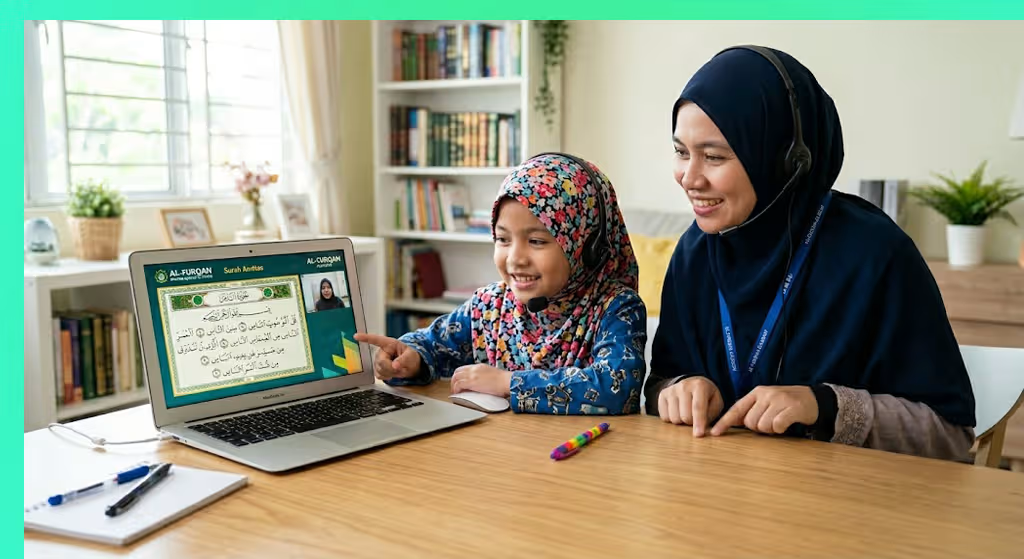
One of the first questions parents and adult learners ask us is how many Quran lessons a week they really need. Too few and progress feels slow; too many and lessons start to compete with school, work and family life. There is no single right number, but there is a right number for you, and it depends on age, goal and how much practice happens between lessons. This guide explains how to choose between three, four and five lessons a week, and when to change your plan.
How Many Quran Lessons a Week? Why the Number Matters
Learning to read the Quran is mostly about building habits: recognising letters instantly, getting the mouth used to new sounds and remembering rules without thinking. Habits are built by repetition spread over time, not by long sessions crammed together.
That is why one long lesson a week rarely works well, especially for children. By the time the next lesson comes round, much of the last one has faded, and the teacher spends the first part of each session revising. Shorter, more frequent lessons keep the material fresh, so each lesson can move forward instead of going back.
At the same time, more is not always better. A tired child in a fifth lesson that week will learn less than a fresh child in their third. The best plan is the one your family can keep up week after week.
Three, Four or Five Days a Week: Which Suits You?
Our lessons are one-to-one and 30 minutes long, offered on three plans. Here is how each one tends to suit different learners:
| Plan | Classes a month | Often suits |
|---|---|---|
| 3 days a week | 12 to 14 | Young children starting out, busy families, adults learning alongside full-time work |
| 4 days a week | 16 to 18 | Children moving from Qaida to the Quran, learners working on Tajweed who want steady progress |
| 5 days a week | 20 to 22 | Hifz students, learners preparing for a goal such as Ramadan, and anyone who wants faster progress and has time to practise |
For current prices and what each plan includes, see our online Quran classes UK fees. Every plan starts with a free trial class, which is a good chance to ask the teacher what they would recommend after hearing the learner read.
Choosing by Goal
Your goal changes the answer more than anything else. As a general guide:
- Learning to read (Noorani Qaida): three or four lessons a week usually works well. Each lesson builds on the last, so regular contact matters, but the content is new and tiring for young minds. See our Noorani Qaida course.
- Reading the Quran fluently: four lessons a week gives enough reading time with the teacher to correct mistakes before they become habits.
- Tajweed: three or four lessons a week, with daily practice of the rule being learned. Tajweed improves through listening and correction, so the time between lessons is where most of the work happens. See our Tajweed course.
- Hifz (memorisation): most Hifz students do best with five lessons a week, because memorisation depends on daily new lessons and daily revision being heard by a teacher. See our Quran memorisation classes.
- Revision or maintaining what you know: three lessons a week is often enough to keep recitation strong.

Choosing by Age and Stage
Young children (about 4 to 6): short, regular lessons work best. Three days a week is a gentle start that builds the habit without overwhelming them. If they are enjoying it after a couple of months, you can add a day.
Primary school children (about 7 to 11): three or four days a week fits well around school, homework and clubs. Many families choose lesson days that avoid their busiest after-school activities.
Secondary school children: workloads rise, especially around exams. Some families keep four days during most of the year and drop to three during GCSE or A-level exam periods, rather than stopping altogether.
Adults: three days a week is the most common choice for working adults. If you are starting from zero, our guide to learning Quran as an adult from zero explains what to expect in the first months.
What Happens Between Lessons Counts Too
The number of lessons a week is only half the picture. A learner with three lessons and ten minutes of daily practice will often progress faster than one with five lessons and no practice at all.
- Practise little and often. Ten minutes a day is better than an hour on Sunday.
- Revise the last lesson first. Before learning anything new, read through what the teacher covered last time.
- Use lesson-free days for listening. Play the Surah or rule being learned and repeat after the reciter.
- Write down questions. Bring them to the next lesson so no time is wasted.
For parents, sitting in on lessons from time to time helps you understand what your child should be practising at home. Our teachers also send a monthly progress report, which shows whether the current number of lessons is working.
Fitting Lessons Around the UK Calendar
The right number of lessons can change through the year. A few patterns we see often among UK families:
- School holidays: some families add a day during the summer or half-term, when children have more free time and energy.
- Exam season: others reduce to three days in May and June to make room for revision, then go back up afterwards.
- Ramadan: many learners want more Quran time during Ramadan; lessons can be timed to suit the family's routine.
- Weekends: if weekdays are already full, online weekend Quran classes can carry some or all of the load.
Signs You Should Change the Number of Lessons
Consider adding a day if:
- The teacher spends much of each lesson revising because too much is forgotten between sessions.
- The learner is keen, practises without being asked and wants to move faster.
- You have a clear goal and a deadline, such as reading the Quran fluently before Ramadan.
Consider reducing for a while if:
- Your child is often tired, upset or reluctant before lessons. Our guide on how to keep kids motivated in online Quran classes can help you find the cause first.
- Lessons are frequently missed or rescheduled because the timetable is too full.
- There is no time for any practice between lessons.
Review the plan every few months with the teacher. The aim is steady progress that lasts, not the fastest possible start.
Frequently Asked Questions
How many Quran lessons a week does a child need?
Most children do well with three or four short lessons a week. Young beginners can start with three, and children memorising the Quran usually benefit from five.
Is one Quran lesson a week enough?
For most learners, especially children, one lesson a week is not enough to build the habit. Much is forgotten between lessons, so progress tends to be slow.
How many lessons a week are best for Hifz?
Most Hifz students do best with five lessons a week, because new memorisation and daily revision both need to be heard and corrected by a teacher.
How long should each Quran lesson be?
Our lessons are 30 minutes, which suits most children and adults. Short, regular lessons are usually more effective than long, occasional ones.
Can I change the number of lessons later?
Yes. Many families adjust their plan as their child's stage, school workload or goals change. Speak to us about moving between the 3, 4 and 5 day plans.
How many lessons a week do adults need?
Three lessons a week is the most common choice for working adults, with short daily practice in between. Adults with more time or a specific goal often choose four or five.
 Guides
 Fees
 Adults