

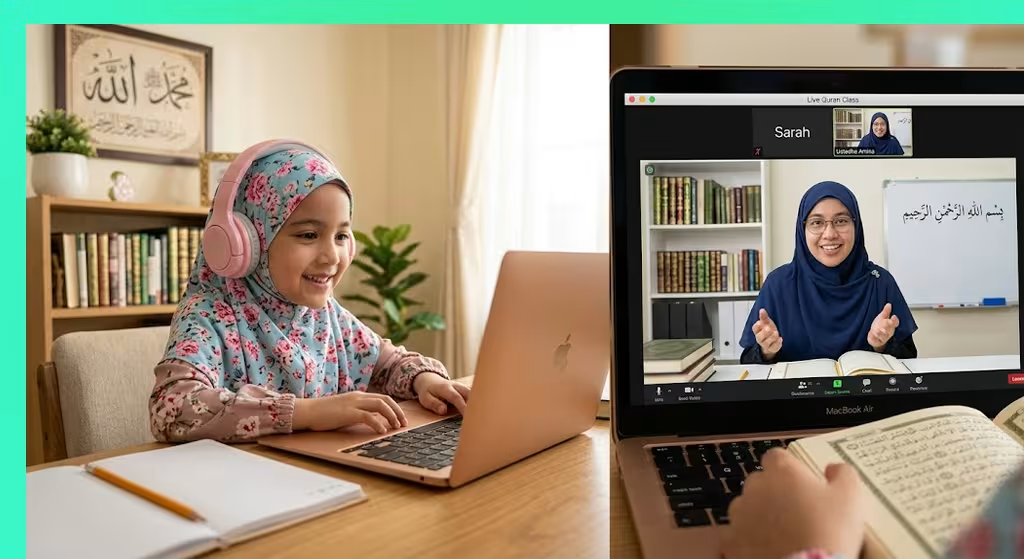
Many Muslim parents in the UK prefer a female Quran tutor for girls, especially as daughters grow older. A female teacher can make a shy child more comfortable, help a teenage girl feel at ease asking questions, and give mothers peace of mind when lessons happen at home. But "female" is only the starting point. This guide explains what to look for, which questions to ask before you choose, and how to judge the trial lesson, so your daughter ends up with a teacher who helps her love the Quran.
Why Parents Choose a Female Tutor for Their Daughter
- Comfort and confidence. Many girls speak up more, and make mistakes more freely, with a female teacher.
- Modesty at home. Online lessons happen in your home; a female teacher means daughters and mothers can relax without worrying about dress or setting.
- A role model. Girls benefit from seeing a woman who has mastered the Quran, perhaps a Hafizah herself, and who teaches with knowledge and confidence.
- Questions as she grows. As girls approach their teens, they often have questions about worship and everyday Islamic practice that they find easier to ask a woman.
- Learning together. Many mothers take lessons with the same teacher, which helps the whole household build a Quran routine.
What to Look For in a Female Quran Tutor
| Quality | Why it matters | How to check |
|---|---|---|
| Correct recitation | Children copy exactly what they hear | Ask her to recite a short Surah in the trial |
| Islamic qualifications | Shows proper training in Quran and Tajweed | Ask where she studied and what she teaches |
| Experience with children | Teaching a seven-year-old is different from teaching adults | Ask how she teaches a child your daughter's age |
| Clear English | UK children need explanations they understand | Notice whether your daughter follows her instructions |
| Patience | Harsh correction makes children withdraw | Watch how she reacts to a mistake |
| Reliability | Missed or late lessons break the routine | Ask how lessons are scheduled and rescheduled |
Questions to Ask Before You Choose
- Where did you study the Quran and Tajweed, and do you hold an Ijazah or other certificate?
- How long have you been teaching girls my daughter's age?
- How do you start with a complete beginner, and how do you assess a child who already reads?
- How do you correct mistakes without discouraging a child?
- Can I sit in on lessons, and how will I hear about progress?
- What will my daughter practise between lessons, and how can I help?
- If she wants to start Hifz later, do you teach memorisation too?
A good teacher will be happy to answer all of these. If you would like to understand what an Ijazah actually means, read our explainer on what an Ijazah in the Quran is.
What Matters at Each Age
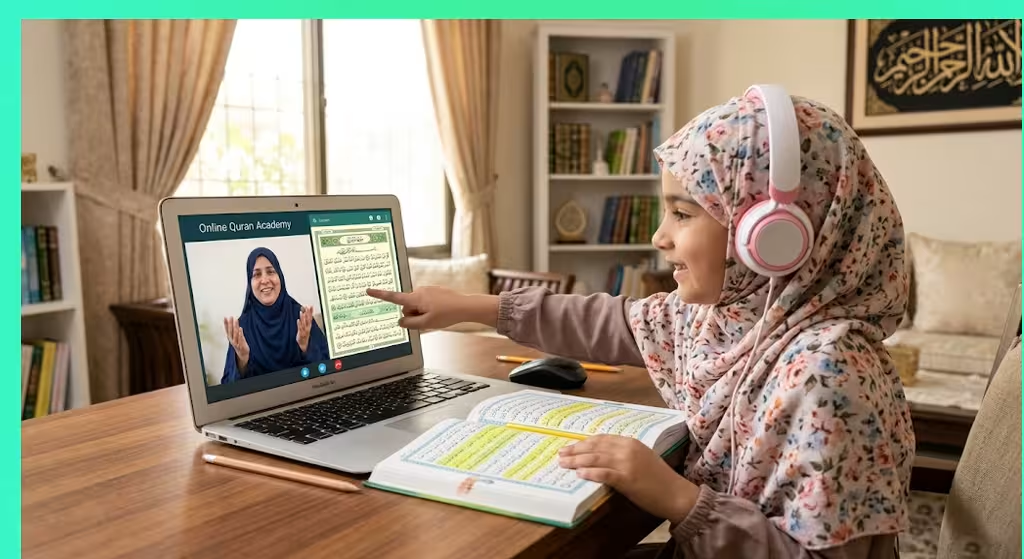
Young girls (about 4 to 7): warmth matters most. Look for a teacher who uses praise, keeps lessons lively and does not rush the alphabet. Most children at this age start with Noorani Qaida.
Girls aged 8 to 12: look for structure and clear goals, such as finishing the Qaida, starting the Mushaf or memorising Juz Amma. A teacher who sets small weekly targets keeps motivation high (we share more ideas in our guide on keeping kids motivated in online Quran classes).
Teenage girls: respect and trust become key. A good teacher treats her as a young adult, explains the meaning behind what she recites and makes space for questions about faith. Some teenage girls also begin Hifz at this stage; our Quran memorisation course is taught by male and female teachers.
How to Judge the Trial Lesson
The free trial is the best way to choose. Sit nearby, stay quiet and watch for these signs:
- Does she build rapport first? A minute of friendly conversation helps a nervous child relax.
- Does she find your daughter's level? A good teacher listens before she teaches.
- How does she correct? Gentle, specific correction ("listen to how I say this letter") is a good sign; repeated "no, wrong" is not.
- Does your daughter speak? In a good lesson the child recites much of the time, not just the teacher.
- How does your daughter feel afterwards? Ask her. If she is smiling and wants another lesson, that matters more than anything on paper.
Keeping Online Lessons Safe and Comfortable
Online lessons are easy to keep safe when parents stay involved:
- Set up the laptop or tablet in a shared room, not a bedroom.
- Use the family's account rather than your daughter's personal one.
- Sit in on lessons, especially at the start, and drop in from time to time later.
- Read the progress reports and talk to your daughter about her lessons.
Our online Quran classes safety checklist covers this in more detail.
Female Tutor at Home or the Local Madrasah?
Some families weigh a female tutor online against the local mosque or madrasah. Both can work, and many children benefit from the community of a madrasah. The main differences are one-to-one attention, a female teacher, timing around school and no travel. We compare both options honestly in our guide to a female Quran teacher versus the local madrasah.
How We Match Girls With the Right Teacher
Our female Quran teachers are certified, graduates of Islamic universities and experienced with children. Lessons are one-to-one and 30 minutes long, timed around UK school hours, and parents are always welcome to sit in. Every family receives a monthly progress report. Girls usually begin with Noorani Qaida, then move on to reading the Quran with Tajweed, and some continue to Hifz. You can learn more about our online Quran classes UK for the whole family.
Frequently Asked Questions
How do I choose a female Quran tutor for my daughter?
Look for correct recitation, Islamic teaching qualifications, experience with children, clear English and patience. Use a free trial lesson to see how she teaches and how your daughter responds.
Can girls memorise the Quran?
Yes. Girls and women have memorised the Quran throughout Islamic history, and many girls in the UK complete Hifz today.
What is a female Hafiz called?
A woman who has memorised the whole Quran is usually called a Hafizah (also written Hafiza or Hafidha).
Can I sit in on my daughter's online Quran lessons?
Yes. Parents are always welcome to sit in, and we recommend it, especially in the first few lessons.
At what age should a girl start Quran lessons?
Many girls start between four and six with Noorani Qaida, but it is never too late. Older girls often progress faster because they focus well.
Do mothers take lessons with the same teacher?
Many do. Learning alongside your daughter is a lovely way to build a Quran routine for the whole household.
 Adults
 Kids
 Tajweed