

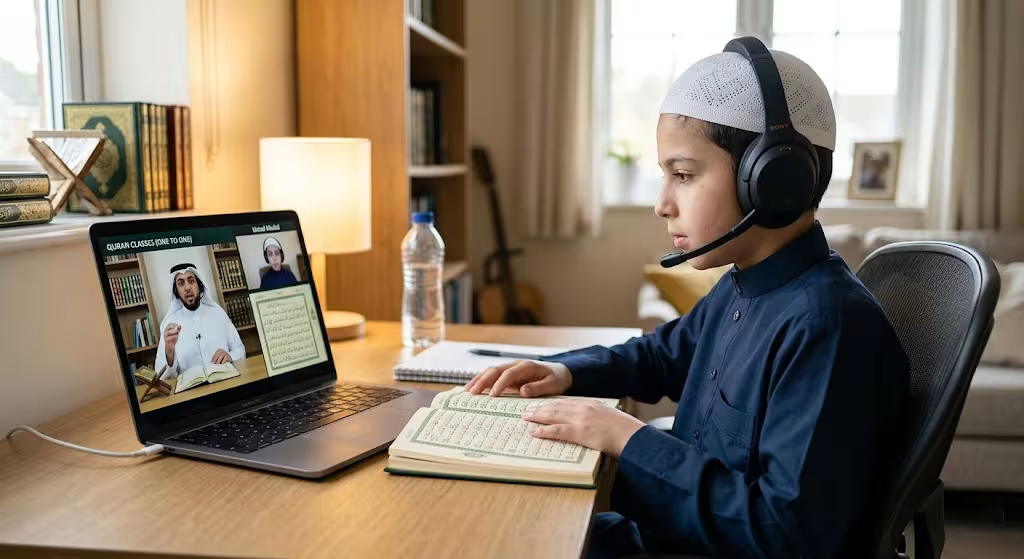
Learning to read the Quran is only part of a child's Islamic education. Children also need to know who Allah is, how to pray, the stories of the Prophets, and how a Muslim behaves at home, at school and online. That is what Islamic Studies for kids online sets out to teach. But course descriptions often list the same headings, so it can be hard to tell what your child will actually learn. This guide sets out what a good children's Islamic Studies course covers at each age, how it should be taught, the questions British Muslim children often ask, and how to combine it with Quran lessons.
Why Islamic Studies Matters for Children Growing Up in the UK
British Muslim children spend most of their week in a school environment where their faith may be one among many. They are asked questions by friends, see different customs and need to understand their own identity with confidence. A good Islamic Studies course gives them clear, age-appropriate answers, practical skills such as praying correctly, and a sense that Islam is something to be proud of. Many parents also ask whether online Quran classes can teach duas and Islamic manners as well; they can, and combining the two is often the most natural approach.
What Islamic Studies for Kids Online Should Cover
| Area | What children learn |
|---|---|
| Belief (aqeedah) | Who Allah is, the six pillars of faith, the Prophets and angels, simple explanations of the Hereafter |
| Worship (fiqh) | Wudu, the steps of salah, the basics of fasting, zakah and Hajj |
| Seerah | The life of the Prophet ﷺ, from his childhood to his character as a father, friend and leader |
| Stories of the Prophets | Adam, Nuh, Ibrahim, Musa, Yusuf, Isa and others, with lessons for daily life |
| Hadith | Short, authentic hadith about kindness, honesty and good habits |
| Manners (adab) | Respect for parents, greeting with salam, table manners, kindness to others |
| Duas | Everyday supplications for eating, sleeping, leaving home and more |
| Islamic calendar | Ramadan, the two Eids, the Islamic months and why they matter |
What to Expect at Each Age
Ages 5 to 7: short stories of the Prophets, the basics of who Allah is, simple duas, learning the words of salah by heart, and everyday manners. Lessons are full of questions, pictures and repetition.
Ages 8 to 10: praying the full salah correctly, wudu step by step, the pillars of Islam and faith in more detail, the seerah in sequence, and short hadith about character.
Ages 11 to 14: deeper understanding of belief, why we worship as we do, the history of early Islam, and the questions young people face about identity, friendships and social media.
If your child is just starting Quran lessons too, our guide to what age a child should start learning Quran covers readiness. In general, Islamic Studies can begin at the same time as Quran reading, because it relies on stories and conversation rather than reading Arabic. A five-year-old who is still learning the letters can already learn about the Prophets, practise wudu and say simple duas, so the two subjects grow side by side from the start.
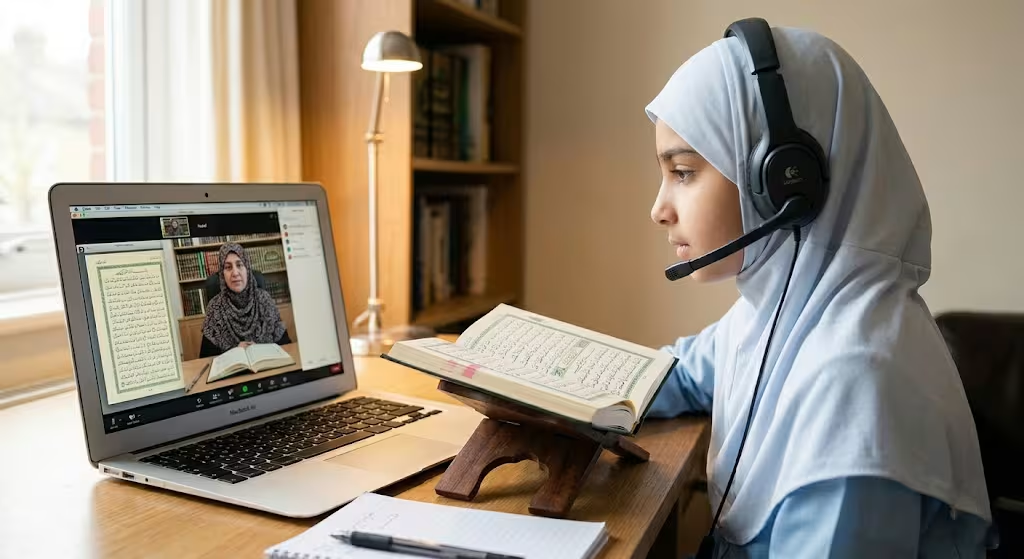
How It Should Be Taught
- Through stories. Children remember a story about the Prophet's ﷺ kindness far longer than a list of rules.
- With questions welcomed. A good teacher encourages "why?" and answers patiently at the child's level.
- With practice. Wudu and salah should be practised, not just described, with the teacher checking each step.
- Linked to daily life. A lesson on honesty connects to school, games and friendships.
- Based on authentic sources. Stories and hadith should come from the Quran and reliable collections.
Questions British Muslim Children Often Ask
Teachers of Islamic Studies in the UK hear these questions again and again. A good course prepares children to understand them calmly:
- "Why do we pray five times a day, and how do I pray at school?"
- "Why do my friends celebrate different festivals, and how should I respond kindly?"
- "Why do some Muslims dress differently from others?"
- "How do I explain Ramadan to my teacher and classmates?"
- "What should I do if someone is unkind about my religion?"
Answering these early, with confidence and good manners, helps children feel secure in who they are.
Combining Islamic Studies With Quran Lessons
Many families add Islamic Studies to their child's Quran lessons rather than treating it as a separate school. A common pattern is three Quran lessons a week plus one Islamic Studies lesson, or a few minutes of each in every lesson for younger children. Children who learn both together often understand their Quran reading better, because they know the stories and meanings behind the Surahs they recite. Families planning the week can read our guide on how many Quran lessons a week.
Simple Ways to Reinforce It at Home
- Ask your child to tell you the story they learned this week.
- Pray together and let your child lead a prayer occasionally.
- Practise one dua a week at the moment it is used.
- Talk about the Islamic month you are in and what it means.
- Praise good manners whenever you see them.
For more ideas on keeping children engaged, see our guide on how to keep kids motivated in online Quran classes.
Frequently Asked Questions
What is covered in Islamic Studies for kids?
Belief, worship (wudu, salah, fasting), the life of the Prophet ﷺ, stories of the Prophets, short hadith, manners, everyday duas and the Islamic calendar.
Are there online Quran classes that also teach duas and Islamic manners?
Yes. Duas and manners can be taught alongside Quran reading, either within the same lessons or as separate Islamic Studies lessons.
At what age can children start Islamic Studies?
From around five, with short stories, simple duas and manners. Content deepens as children grow.
How many Islamic Studies lessons a week does a child need?
One or two a week alongside Quran lessons works well for most children.
Can my child do Islamic Studies and Quran together?
Yes. Many families combine them, which helps children understand the meaning behind what they recite.
Are female teachers available for Islamic Studies?
Yes. Male and female teachers are available.
 Kids
 Fees
 Kids